Discover • Adventure • Wildlife • Luxury
Ranthambore Safari Booking: Jeep, Canter & Tour Packages
Stay in handpicked luxury resorts nestled around the reserve. Book your tiger safari with expert guides.
India's most iconic tiger reserve — explore core zones, spot the tigers & stay in handpicked jungle resorts.
- Instant Confirmation
- Best Price Guarantee
- 24/7 Support

About Ranthambore
Ranthambore National Park is one of India's most iconic wildlife destinations, celebrated for its thriving population of majestic Bengal tigers. Located in the heart of Rajasthan, this vast sanctuary covers 1,334 sq km of rugged hills, serene lakes, and dense forests. Beyond tigers, the park is home to leopards, crocodiles, deer, and more than 300 species of vibrant birds — making it a paradise for nature enthusiasts.
At the park's heart stands the legendary Ranthambore Fort, a UNESCO World Heritage Site. Towering over the landscape, it offers sweeping views, fascinating history, and a timeless charm. Whether you're chasing the thrill of a tiger sighting, capturing wildlife through your lens, or soaking in the wilderness, Ranthambore promises memories that will last a lifetime.
At bookranthamboresafari.co.in, we make Ranthambore safari booking simple, affordable and instant — whether you're travelling from Delhi, Jaipur, Mumbai, Ahmedabad, Bangalore or anywhere else in India. Choose a jeep (Gypsy) or canter safari across all 10 zones, led by expert naturalist guides who know every trail, with packages starting from ₹6,999 per person. Our core-zone bookings — Zone 3 Padam Talao, Zone 4 Malik Talab and Zone 5 Raj Bagh — are where tiger sightings are most frequent.
Get instant booking confirmation, upfront pricing and 24/7 support from our Sawai Madhopur office — call +91 87418 73412 or book online anytime.
Tiger Territory
One of the best places in the world to spot Bengal tigers in their natural habitat.
Wildlife Wonderland
Leopards, marsh crocodiles, sambar deer, and hundreds of exotic bird species.
Heritage Meets Nature
Explore the ancient Ranthambore Fort and take in its breathtaking vistas.
Wildlife Packages
Choose from our best-selling Ranthambore packages.


Hotels & Resorts
Stay at the finest properties in Ranthambore – discover luxury, nature, and comfort.


Ranthambore Tiger Safari Price 2026
Transparent pricing for all safari options with no hidden charges.

Things To Do In Ranthambore National Park
Beyond the tiger safari — forts, lakes, temples, and quiet corners of the park worth building into your visit.

Safari Experience
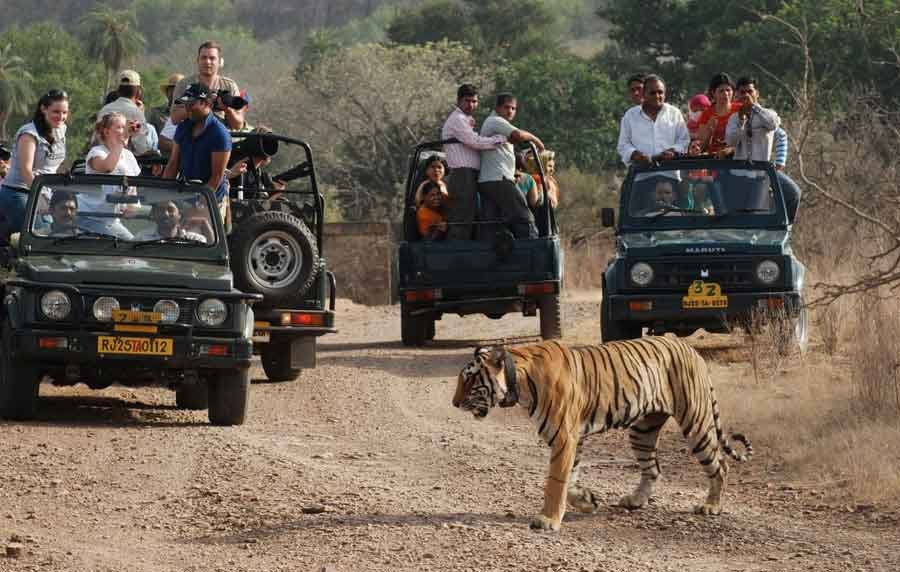
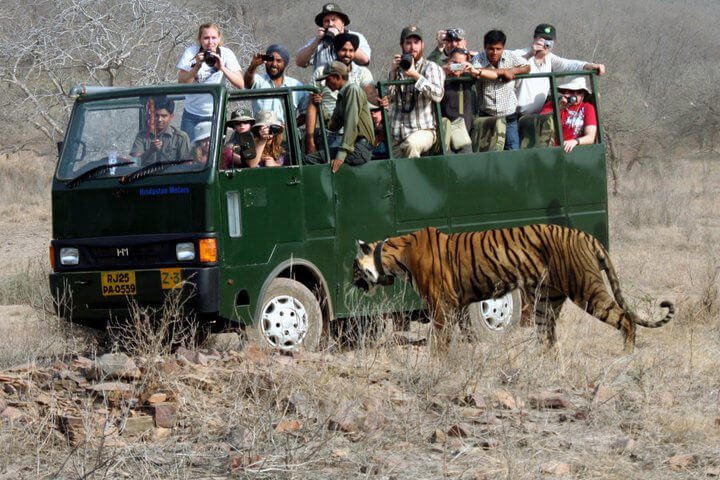
Explore the park's core zones aboard an open Gypsy or Canter, spotting Bengal tigers, leopards, and sloth bears alongside more than 300 bird species and dense dry-deciduous forest.
Explore More
Ranthambore Fort
A 10th-century Chauhan-era fort perched above the park and a UNESCO World Heritage Site — ancient gates, temples, and ruins with sweeping views over the reserve.
Explore More
Kachida Valley
A quiet, scrub-covered valley on the park's edge, known for leopard sightings and rugged Aravalli hill scenery away from the main safari crowds.
Explore More
Padam Talao
The largest of the park's lakes, ringed by lotus blooms and framed by Jogi Mahal — one of the most scenic and reliable spots to watch wildlife gather at the water's edge.
Explore More
Jogi Mahal
A former resting place of the Jaipur royal family, set right on the shore of Padam Talao beneath one of India's largest banyan trees.
Explore More
Malik Talao
A smaller, tucked-away lake ringed by dense greenery — quieter than Padam and Raj Bagh, and a good bet for birdlife and early-morning reflections.
Explore More
Raj Bagh Talao
Ranthambore's most famous lake and one of the park's best tiger-spotting locations, where tigers are regularly seen wading, resting, or hunting at the water's edge.
Explore More
Raj Bagh Ruins
Crumbling domes, arches, and pavilions set between Padam and Raj Bagh lakes — a striking backdrop for wildlife photography and one of the park's most atmospheric spots.
Explore More
Trinetra Ganesh Temple
One of the oldest Ganesha temples in Rajasthan, built inside Ranthambore Fort and famous for its three-eyed idol — daily wedding-invitation mail still arrives addressed to the deity.
Explore MoreSee the full list in our guide to places to visit in Ranthambore or learn about the national park itself.
About Ranthambore National Park
Ranthambore National Park, in the Sawai Madhopur district of Rajasthan, is one of India's largest and most celebrated wildlife reserves — the national park holds about 392 sq km of rugged core forest within the 1,334 sq km tiger reserve, around the historic Ranthambore Fort, part of the wider Ranthambore Tiger Reserve that also takes in the neighbouring Kaila Devi and Sawai Man Singh sanctuaries. Widely regarded as the best place in India to see a Royal Bengal Tiger in the wild, a Ranthambore jungle safari regularly turns up tigers active in broad daylight — hunting, raising cubs, and moving between the ancient ruins scattered across the reserve, a setting unlike any other tiger reserve in the country. October to June is generally considered the best time to visit Ranthambore, and with limited daily permits, planning your Ranthambore safari booking in advance makes a real difference.
Ranthambore National Park — Key Facts at a Glance
Location
Sawai Madhopur, Rajasthan
Established
1955 Sanctuary · 1980 National Park
Total Area
1,334 sq km (515 sq mi)
Famous For
Royal Bengal Tiger Safari
Best Time
October to June
Safari Types
Jeep (6-seat) & Canter (20-seat)
Safari Timings
Morning & Afternoon Daily
Safari Zones
10 Zones (Core 1–6)
The Story So Far
History, Conservation & Wildlife of Ranthambore
History of Ranthambore National Park
Ranthambore National Park takes its name from the imposing Ranthambore Fort, a UNESCO World Heritage Site still standing at the heart of the reserve. These forests once served as the private hunting grounds of the Maharajas of Jaipur, and were pushed close to collapse as industrialisation spread across the region. The Rajasthan Forest Act of 1953 was the first real protective step, followed by the formal Sawai Madhopur Sanctuary declaration in 1955. When Project Tiger launched nationwide in 1973, Ranthambore was named one of India's founding tiger reserves — turning a former royal shooting ground into one of the country's best-known conservation stories.
Tiger Conservation at Ranthambore
Ranthambore tiger reserve is one of India's clearest wildlife conservation successes. Project Tiger, run through the National Tiger Conservation Authority (NTCA), split the reserve into protected core zones — where commercial activity is banned outright — and buffer zones that allow limited, regulated local use. That structure, backed by sustained anti-poaching patrols and growing community involvement in ecotourism, has helped the reserve's Royal Bengal Tiger population climb to around 92 individuals as of 2026 — a dramatic recovery for a reserve that nearly lost its tigers to poaching within living memory.
Wildlife, Flora & Fauna of Ranthambore
The dry deciduous forest inside Ranthambore National Park holds around 539 recorded flowering plant species, dominated by Dhok trees alongside mango, tamarind, peepal, neem, and some of India's oldest banyan trees. Wildlife here goes well beyond the tigers that draw most visitors: leopards, sloth bears, striped hyenas, marsh crocodiles, wild boar, sambar and spotted deer, nilgai and jackals all share the reserve. Reptile-watchers can spot Indian pythons, cobras and monitor lizards, while birders track over 300 species on a single jungle safari, from flamingos and pelicans to falcons and the rare Red-Headed Vulture.
Ranthambore Safari Timings 2026–27
Jeep safari and canter safari schedules vary by season across all Ranthambore safari zones — always arrive 45 minutes before your slot
| Month Period | Morning Safari | Afternoon Safari |
|---|---|---|
| Oct 1 – Oct 31 | 6:30 AM – 10:00 AM | 2:30 PM – 6:00 PM |
| Nov 1 – Jan 31 | 7:00 AM – 10:30 AM | 2:00 PM – 5:30 PM |
| Feb 1 – Mar 31 | 6:30 AM – 10:00 AM | 2:30 PM – 6:00 PM |
| Apr 1 – May 15 | 6:00 AM – 9:30 AM | 3:00 PM – 6:30 PM |
| May 16 – Jun 30 | 6:00 AM – 9:30 AM | 3:30 PM – 7:00 PM |
| Jul 1 – Sep 30: Core zones 1–5 closed; some buffer zones may run on a limited basis, weather permitting | ||
Latest Updates from Ranthambore Tiger Reserve
Ranthambore's Royal Bengal Tiger population has grown to 72 tigers (about 50 adults and 22 cubs, Rajasthan Forest Department, July 2026), one of the strongest tiger reserve recoveries in India since Project Tiger began tracking numbers here.
Zone-wise rest days remain in effect across the reserve — core zones 1–5 close every Wednesday and zones 6–10 close every Tuesday, giving each part of the jungle safari circuit a regular break from tourist activity.
Safari permits for Ranthambore National Park are allocated through the forest department's online system and are genuinely limited — booking your Ranthambore safari 30–60 days ahead is strongly recommended in peak season.
Ongoing anti-poaching patrols, monitoring technology and community ranger employment continue to protect Ranthambore's tiger population, building on the reserve's decades-long Project Tiger conservation work.
Plan Your Ranthambore Safari Today
Book a morning jeep safari or canter safari in core zones 1–6 for the best chance of spotting a Royal Bengal Tiger. Ranthambore safari packages are available from ₹6,999/person, including hotel, meals and all forest permits — complete your Ranthambore safari booking online with expert naturalist guides and instant confirmation across every one of Ranthambore National Park's safari zones.
From Our Blog
Explore More
Happy Customers & Stories
Frequently Asked Questions
Ranthambore is one of the best places in the world to see wild Bengal tigers in their natural habitat, combined with a UNESCO World Heritage fort, three scenic lakes, and over 300 bird species inside a single park. Few reserves pair this much tiger density with accessible history and landscape in one visit.
The park is open from October to June, with November to April the most comfortable period to visit. The weather stays favorable for wildlife sighting during this period. May and June are preferred by photographers, as tigers are more easily spotted near waterholes during peak heat.
The nearest town, Sawai Madhopur, sits on the main Delhi–Mumbai railway line, making train the most convenient way to reach Ranthambore from most of India. It's about 180 km from Jaipur and 450 km from Delhi by road. From Sawai Madhopur station, taxis and local buses cover the short final stretch.
Tiger sightings are never guaranteed — they depend on the zone, season, and time of day. Most visitors who book 3–4 safaris across different zones see a tiger at least once; a single safari is closer to a coin flip. Multiple safaris across your stay meaningfully improve your odds.
Beyond tigers, Ranthambore is home to leopards, sloth bears, striped hyenas, marsh crocodiles, and large herds of sambar and chital deer. The park also holds over 300 recorded bird species, from painted storks to raptors, making it a strong destination for birdwatchers as well as tiger seekers.
Core zones 1–5 close from 1 July to 30 September each year; some buffer zones may run on a limited basis, weather permitting. The park reopens fully on 1 October.
The nearest airport is Jaipur International Airport, roughly 180 km away and about a 3.5–4 hour drive. From Jaipur, Ranthambore is reachable by road or by connecting to a train at Jaipur Junction — there's no airport closer to the park itself.
Sawai Madhopur Junction is the nearest railway station, right at the edge of the park and a major stop on the Delhi–Mumbai line. It's well connected to Delhi, Jaipur, Mumbai, and most major Indian cities, making it the most common way travelers reach Ranthambore.
Ranthambore Tour Packages By City
Plan your Ranthambore wildlife trip from your city