
Increasing Tiger Activity in Ranthambore: What Visitors Should Know
Ranthambore National Park has always drawn wildlife enthusiasts from across India and abroad, but 2026 has brought a new kind of buzz to this beloved reserve. Tiger activity in Ranthambore is visibly increasing — not just inside designated safari zones, but along public roads, temple routes, and buffer areas that once saw little big-cat movement. Understanding why this is happening, and what it means for visitors, is essential reading before you finalise your Ranthambore safari booking.
Why Tiger Numbers in Ranthambore Are Rising
Spread across 1,334 square kilometres in the Sawai Madhopur district of Rajasthan, Ranthambore National Park is home to 72 tigers, tigresses and cubs (Rajasthan Chief Wildlife Warden, July 2026, PTI via ThePrint) — a figure that reflects decades of sustained conservation effort rather than a sudden lucky season.
Several factors explain this steady growth.
- Anti-poaching enforcement has tightened considerably. Forest guards patrol every zone of the park around the clock, using camera traps and GPS-linked tracking technology to monitor individual tiger movements. Organised poaching networks that once threatened the reserve have largely been dismantled, and the data shows it.
- Prey availability has remained strong. Ranthambore supports healthy populations of spotted deer, sambar, nilgai, and wild boar — precisely the prey base that allows tigers to survive, breed successfully, and raise cubs to adulthood.
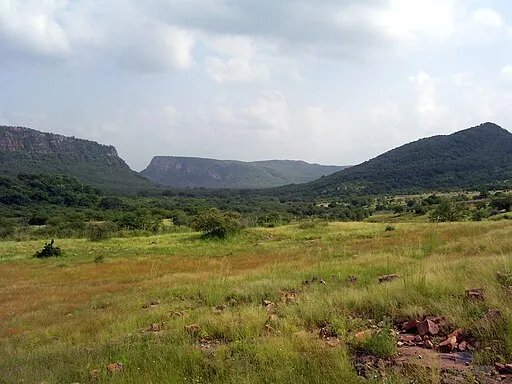
- Habitat quality across the reserve's dry deciduous forests, rocky outcrops, seasonal lakes, and ancient ruins has been maintained carefully, giving tigers the cover and water sources they need year-round.
The Trinetra Ganesh Temple Road: A New Tiger Hotspot
One of the most talked-about developments in Ranthambore tiger news 2026 is the marked increase in tiger sightings along the road leading to the Trinetra Ganesh Temple — a significant religious site located within the forest boundary that attracts devotees from across Rajasthan and beyond.
This road passes through active tiger habitat. As the reserve's tiger population grows and younger animals establish new territories, overlap between tiger movement corridors and human-use routes has become increasingly common.
What Actually Happens When a Tiger Appears
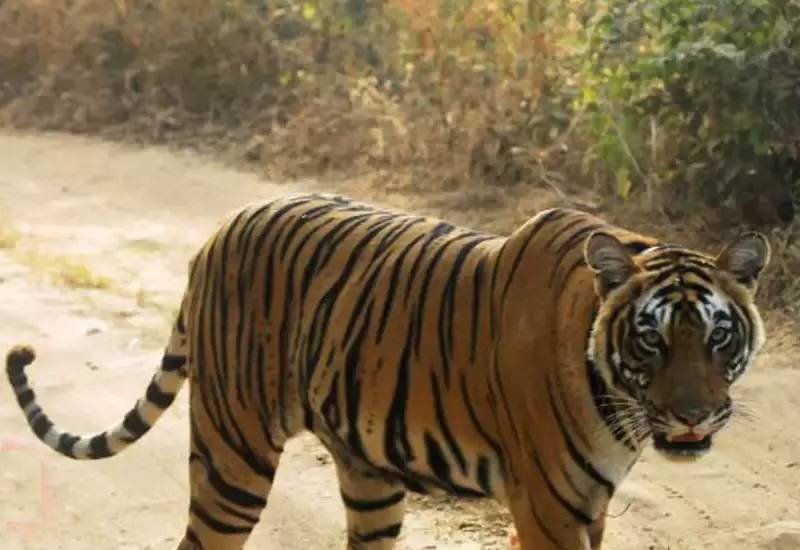
When a tiger is spotted on or near the temple road, forest officials act immediately. All vehicle movement is halted, drivers receive clear instructions, and everyone is required to stay inside their vehicles. No loud sounds, no flash photography from windows, no attempts to approach for a better view.
The wait can last anywhere from a few minutes to several hours depending on the animal's behaviour. In one documented incident, male tiger T-2511 remained near the temple road for over two hours before returning to deeper forest. During that time, vehicles queued on both sides of the road, and all temple access was paused.
For many visitors, this kind of unplanned encounter — seeing a wild tiger outside a designated Ranthambore safari zone — turns out to be the most memorable part of their trip. For others, particularly those with fixed schedules or young children, the wait creates genuine inconvenience. Both responses are completely understandable.
Ready to plan your Ranthambore safari? Send us a booking enquiry and our team will reply with options.
Send Booking EnquiryThe Territorial Shift: T-107 Sultana and T-2511
The temple road area's recent tiger activity reflects a broader territorial realignment happening across this section of the reserve.
For years, this zone was primarily associated with T-107, the female tiger known as Sultana, who held a stable territory here and was regularly discussed by safari guides during Ranthambore gypsy safari tours. Female tigers typically maintain fixed territories for extended periods, making them predictable and well-documented.
The arrival of male tiger T-2511 has changed the dynamic. Male tigers require significantly larger territories than females and actively patrol and scent-mark to assert dominance over areas where females are present. As T-2511 has expanded his range into Sultana's zone, movement patterns across the entire area have shifted — bringing both tigers closer to the temple road more frequently than before.
This is entirely natural tiger behaviour. It is also a direct consequence of a healthy, growing population where competition for territory pushes animals into previously quiet areas.

Forest Department Response: Safety Without Disruption
The Rajasthan Forest Department has developed a systematic approach to managing increased tiger activity near Ranthambore's public areas:
- Rapid response when tigers are spotted near roads — traffic halted within minutes
- Continuous monitoring via camera trap networks and ranger patrols across buffer zones
- Safari guide briefings — all licensed guides who lead Ranthambore safari tours receive regular updates on tiger movement so visitors are prepared
- Village awareness programmes — communities bordering the reserve receive guidance on livestock protection, how to report sightings, and how to contact rapid-response teams
- Strict visitor protocols — no vehicle exits, no noise, no sudden movement near tigers; rules enforced by trained naturalists on every safari

What This Means for Your Ranthambore Safari Experience
If you are planning to book a Ranthambore safari in 2026, increased tiger activity is genuinely good news for sighting probability. Here is what to keep in mind:
- Higher sighting chances across more zones. As tigers expand their ranges, encounters are no longer concentrated in a handful of historically reliable zones. Zones that previously offered lower sighting rates are now seeing regular tiger activity.
- Temple visits may involve unexpected waits. If you are combining a Trinetra Ganesh Temple visit with your Ranthambore trip, build extra time into your schedule. A tiger on the road is not an emergency — it is a managed situation — but it does require patience.
- Follow all guide instructions without exception. Trained naturalists on your safari vehicle are your primary safety resource. Their instructions during a tiger encounter are non-negotiable and are designed to protect both you and the animal.
- Book in advance. With growing visitor interest driven by rising Ranthambore tiger sightings, safari permits — particularly for the morning slot — fill up quickly. Early Ranthambore online safari booking is strongly recommended, especially for October through June.
Ready to plan your Ranthambore safari? Send us a booking enquiry and our team will reply with options.
Send Booking EnquiryLocal Community Impact and Ongoing Challenges
Increased tiger activity brings real concerns for communities living along Ranthambore's borders. Livestock predation incidents have risen in some buffer zone villages as sub-adult tigers — young males without established territories — probe the edges of the reserve looking for prey and space.
The forest department runs compensation schemes for livestock losses, though payout delays remain a friction point. Community-level awareness programmes have helped reduce panic and improve reporting, but maintaining local goodwill toward Ranthambore tiger conservation requires consistent follow-through on compensation and communication.
Tiger attacks on humans remain extremely rare. The forest department's rapid response protocols are specifically designed to prevent the kind of repeated human-tiger contact that escalates into conflict. Early warning systems, including SMS alerts tied to collared tigers' GPS positions, are now active in several buffer villages.
The Bigger Picture: Ranthambore as a Conservation Success
The rising tiger count in Ranthambore National Park is not an isolated statistic. It reflects India's broader conservation trajectory — from 1,411 tigers nationally in 2006 to a minimum of 3,167 in the 2022 NTCA census. Ranthambore is one of the reserves that has driven this national recovery, and it is now formally identified by the National Tiger Conservation Authority as the primary source population for tiger dispersal across semi-arid western India.
Young tigers from Ranthambore have been documented dispersing into the newly notified Ramgarh Vishdhari Tiger Reserve to the south and eastward toward Kuno-Shivpuri-Madhav. Multiple animals have been translocated to Sariska and Mukundra Hills Tiger Reserve to seed those recovering populations. Rajasthan's total tiger count now stands at 149 across five reserves in 2026.
The increased activity near the temple road and buffer zones is, in a real sense, a measure of how well the reserve is doing. A park with 26 tigers in 2005 does not have sub-adults exploring new territories. One with 72 tigers in 2026 does — and that is exactly what recovery looks like from the inside.
Tips for Visitors: Making the Most of Increased Tiger Activity
- Choose morning slots — tigers are most active in early morning hours before temperatures rise
- Request zones with recent sightings — your guide or booking agent will have current intelligence on active areas
- Carry binoculars — tigers moving through buffer scrub are easier to spot with magnification
- Stay patient at road crossings — an unexpected tiger on the temple road is a gift, not an inconvenience
- Respect the animal — keep voices low, avoid sudden movements, and never pressure your driver to move closer
- Book early — Ranthambore safari permit booking for peak months (November–March) fills weeks in advance
Ready to plan your Ranthambore safari? Send us a booking enquiry and our team will reply with options.
Send Booking EnquirySources
- Rajasthan Forest Department, tiger movement reports 2026
- National Tiger Conservation Authority (NTCA), Status of Tigers in India 2022
- Wildlife Institute of India
- Field reports from Ranthambore safari naturalists, August 2026
Frequently Asked Questions
Is it safe to visit Ranthambore National Park given increased tiger activity?
Yes. The forest department's rapid-response protocols are well-established. Tiger encounters near roads are managed carefully, and all safari vehicles travel with trained naturalists. Ranthambore receives hundreds of thousands of visitors each year safely.
Which zones have the highest tiger sighting rates in 2026?
Zones 1 through 5 in the core area have historically offered the best sightings. However, with territorial expansion, Zones 6 through 10 are now producing regular encounters. Your guide will have the most current zone-by-zone intelligence.
Who are T-107 Sultana and T-2511?
T-107, known as Sultana, is an established female tiger with a long-documented territory near the Trinetra Ganesh Temple road. T-2511 is a male tiger that has recently expanded into the same area, creating a territorial overlap that has increased road-level sightings for both animals.
How do I book a Ranthambore safari?
Permits can be booked through the Rajasthan Forest Department's official portal or through licensed tour operators. Booking 4 to 6 weeks in advance is advisable for peak season slots.
What should I do if I encounter a tiger on the road to Trinetra Ganesh Temple?
Stay inside your vehicle, keep noise to a minimum, switch off the engine if instructed, and follow all directions from forest officials or your driver. Do not attempt to photograph from outside the vehicle.
Plan Your Ranthambore Safari Today
Send your dates and group size; our private booking team replies with options and a quote.
The Book Ranthambore Safari team tracks forest department data, NTCA census reports, and conservation news to keep our travel guides accurate and current.

