
Ranthambore Tiger Count and Conservation: Achievements & Challenges
When Ranthambore's tiger population crashed to just 26 individuals in 2005 following a devastating poaching crisis, conservationists feared the reserve might never fully recover. Today, that same landscape shelters 72 tigers, tigresses and cubs (Rajasthan Chief Wildlife Warden, July 2026, PTI via ThePrint) — a transformation that ranks among the most remarkable wildlife recovery stories in modern India. Yet beneath these impressive Ranthambore tiger population numbers lies an unfinished story of ongoing threats, difficult trade-offs, and decisions that will determine whether this success endures for another generation.
Ranthambore Tiger Conservation: Before and After
The Ranthambore National Park tiger count tells only part of the story. Understanding how conservation methods evolved is equally important for appreciating how far this reserve has come.
| Conservation Metric | 2005 — Crisis Period | 2026 — Current Status |
|---|---|---|
| Tiger Population | 26 (post-poaching collapse) | 72 (July 2026, Rajasthan Chief Wildlife Warden) |
| Monitoring Method | Manual pugmark tracking | AI-assisted camera traps + M-STrIPES framework |
| Villages in Core Zone | 12 villages, 681 families | Core zone largely cleared after phased relocations |
| Corridor Connectivity | Fully isolated population | Linked to Ramgarh Vishdhari & Mukundra Hills |
| Institutional Oversight | Project Tiger only | NTCA + Wildlife Crime Control Bureau (est. 2006) |
| Regional Role | No dispersal recorded | Sole source population for semi-arid western India |
What Actually Drove the Ranthambore Tiger Recovery?
The Ranthambore tiger reserve didn't recover through a single policy or a lucky breeding season. It recovered because three critical systems worked in parallel, and modern reserve management now identifies individual tigers by unique stripe patterns, tracks cub births in real time, monitors territorial disputes between dominant males, and maps sub-adult dispersal routes before young tigers reach conflict zones near villages — a level of data-driven management that simply didn't exist two decades ago.
- Armed patrol coverage with expanded forest guard networks
- Systematic camera-trap monitoring using individually identified tigers
- Phased village relocation that removed permanent settlements from core habitat
The Methodology Shift That Changed Everything
Following the catastrophic poaching collapse at Sariska Tiger Reserve in 2004, the government established the National Tiger Conservation Authority (NTCA) in 2006. Under NTCA's Phase IV census protocol, the 2022 All India Tiger Estimation deployed over 32,000 camera traps, captured 4.7 crore wildlife photographs across 6.4 lakh square kilometres, and produced what is internationally recognised as the world's largest camera-trap wildlife survey. When researchers worldwide cite Ranthambore tiger numbers, they trust these figures precisely because they emerge from this rigorous framework — not from older, less reliable pugmark estimates.
Ready to plan your Ranthambore safari? Send us a booking enquiry and our team will reply with options.
Send Booking Enquiry
The People Behind the Recovery
The human dimension matters equally. The late Fateh Singh Rathore — the IFS officer who joined Ranthambore's first Project Tiger team in 1973 and personally supervised the original village relocations — built the community-conservation philosophy that continues to guide this reserve. His Sawai Madhopur-based organisation, Tiger Watch, still operates today and remains central to Ranthambore's on-the-ground approach.
Ranthambore Tiger Population Growth: Year by Year
The recovery from the 2005 crisis was neither immediate nor smooth. The management focus has evolved alongside these numbers — rangers today track dispersal patterns as carefully as raw headcounts, mapping the routes tigers use to move beyond Ranthambore's core into the broader semi-arid landscape.
The NTCA's Status of Tigers in India 2022 formally identifies Ranthambore as the only source population currently expanding tiger distribution across semi-arid western India — with documented dispersal eastward into Dholpur and the Kuno-Shivpuri-Madhav landscape, and southward via Ramgarh Vishdhari Tiger Reserve (notified May 2022 as India's 52nd tiger reserve specifically to function as a corridor to Mukundra Hills). Radio-collared male T-115 became one of the first documented tigers to successfully navigate this southern dispersal route.
- 2005 — Historic low of approximately 26 tigers following poaching crisis
- 2014 — NTCA census records 48 tigers; recovery clearly underway
- 2022 — Official census count reaches 69 tigers
- July 2026 — Rajasthan Chief Wildlife Warden reports 72 tigers, tigresses and cubs (PTI via ThePrint)

The Overcrowding Challenge Nobody Anticipated
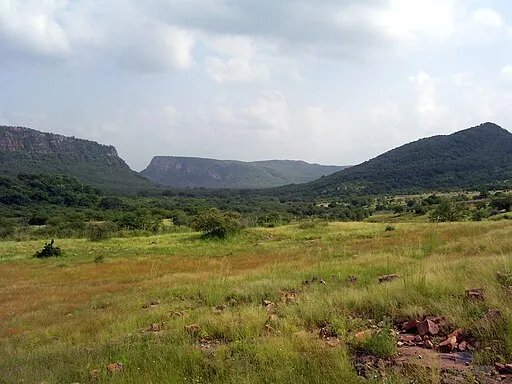
Conservation success created its own complications. When a reserve holds more tigers in Ranthambore than its core habitat can comfortably support, younger animals get pushed into buffer zones — and eventually toward farmland and village boundaries. The Rajasthan Forest Department has confirmed that tigers currently use roughly 700 of Ranthambore's 1,334 square kilometres, and approximately a dozen sub-adults without established territories are under active monitoring on the reserve's periphery.
The Wildlife Institute of India has flagged this territorial pressure as Ranthambore's next major conservation challenge. The problem is no longer a shortage of tigers — it is a shortage of safe space for them.
Ready to plan your Ranthambore safari? Send us a booking enquiry and our team will reply with options.
Send Booking EnquiryThreats That Still Endanger Ranthambore's Tigers
Poaching: Changed in Form, Not Eliminated
The organised trafficking networks that targeted Ranthambore National Park in the early 2000s have largely been dismantled. However, opportunistic snaring and poisoning incidents continue along buffer zone edges. Nationally, NTCA data records 167 tiger deaths in 2025 and 126 in 2024 — though annual mortality has remained below 5% of India's total tiger population for four consecutive years, which indicates the overall situation has stabilised at a national level.
Habitat Fragmentation
Expanding tourism infrastructure, agricultural encroachment, and a railway corridor cutting through the landscape all fragment habitat in ways that don't show up dramatically in a single season but compound meaningfully over decades.
Ready to plan your Ranthambore safari? Send us a booking enquiry and our team will reply with options.
Send Booking EnquiryWater Scarcity in a Semi-Arid Zone
This threat receives far less attention than poaching, yet it creates consistent pressure. Ranthambore sits in a semi-arid region where prolonged dry seasons concentrate both prey animals and tigers around shrinking water sources — raising the probability of dangerous encounters with nearby communities during drought years. Retaliatory killings tied to livestock predation still occur, particularly where government compensation payments are delayed.
Genetic Isolation: The Quiet Long-Term Risk
A peer-reviewed genetic study of the Ranthambore population — reported in Mongabay-India and Down To Earth — has documented signs of inbreeding consistent with an isolated island population. Researchers have called for active management of Ranthambore as part of a wider northwestern metapopulation, with facilitated gene flow between reserves and potentially genetic rescue from Central Indian tiger populations. This is precisely why the Mukundra Hills and Ramgarh Vishdhari corridors are treated as strategic conservation infrastructure rather than optional extras.
How Anti-Poaching Measures Protect Ranthambore
Ready to plan your Ranthambore safari? Send us a booking enquiry and our team will reply with options.
Send Booking EnquiryA Layered Protection System
Current anti-poaching operations in Ranthambore tiger reserve rely on tools working in combination. None of these tools works well in isolation — together, they have reduced confirmed poaching incidents dramatically compared to two decades ago.
- Ground patrols — Forest guards on foot and by vehicle cover core and buffer zones
- Drone surveillance — Harder-to-reach terrain gets aerial coverage
- AI-assisted camera monitoring — Real-time alerts when movement patterns signal intrusion
- Village informant networks — Buffer zone communities flag suspicious activity early

Village Relocation: The Structural Intervention
According to Rajasthan Forest Department records, 12 villages comprising 681 families were relocated from the core between 1973 and 1979 during the reserve's first clearing programme. A second wave began in 2002, starting with Pathra (approximately 110 families relocated near Kailashpuri in Khandar), followed by Mordungri, Indala, and Khatoli between 2007 and 2014 — culminating in Ranthambore's notification as a Critical Tiger Habitat in December 2008. The rehabilitation process has been uneven, and its social costs are documented and real. However, the core is now largely free of permanent human settlement.
Community Involvement as Conservation Tool
One of the most effective anti-poaching tools available turns out to be economic inclusion. Villagers who once had little stake in tiger survival are now employed as safari guides, forest guards, and ecotourism staff — shifting the economic incentive away from poaching. The pattern holds across Indian reserves: where local communities capture a meaningful share of tourism revenue, poaching pressure reliably eases.
Legal deterrents have strengthened too. Convictions under the Wildlife (Protection) Act, 1972 now carry serious prison sentences, and the Wildlife Crime Control Bureau (established 2006) has made organised poaching a riskier and more costly operation than it was at the start of this century.
Ready to plan your Ranthambore safari? Send us a booking enquiry and our team will reply with options.
Send Booking EnquiryWhy Human-Wildlife Conflict Remains Ranthambore's Hardest Problem
As Ranthambore's tiger population grows beyond what core zones can absorb, young males in particular move into buffer areas where farmland, grazing land, and village paths overlap with tiger territory. Livestock predation causes real economic harm to families who often have few alternative income sources. Fatal attacks — though rare — do occur. Three fatal incidents were reported in and around Sawai Madhopur in a single month in late 2020, all attributed to tigers moving through buffer zones.
Compensation Delays Fuel Resentment
Government compensation schemes for livestock losses exist, but payment delays are common. A farmer who loses cattle to a tiger and waits months for reimbursement is far less likely to report the next incident — or cooperate with the next conservation survey. Practitioners working on this landscape consistently identify faster compensation processing (not just higher payout amounts) as the intervention most likely to reduce retaliatory killings.
Early Warning Technology
Some buffer villages now receive SMS alerts tied to collared tigers' GPS positions, giving residents real-time notice when a tiger is in the vicinity. It is a modest technological intervention, but pilot data shows it has already reduced dangerous encounters in the villages where it has been deployed.
Ready to plan your Ranthambore safari? Send us a booking enquiry and our team will reply with options.
Send Booking EnquiryWhat the Future Holds for Tiger Conservation in Ranthambore
Landscape-Level Thinking Replaces Single-Reserve Focus
Ranthambore's conservation strategy is shifting from protecting one reserve to securing an entire tiger landscape. These corridors allow tigers to disperse naturally, ease territorial pressure inside the core, reduce long-term inbreeding risk, and build self-sustaining tiger populations in reserves that currently lack them. The Rajasthan Forest Department has already translocated multiple tigers from Ranthambore to both Mukundra Hills and Sariska to seed those populations. Rajasthan's overall tiger count has risen to 149 across five reserves in 2026.
- The Ranthambore–Ramgarh Vishdhari–Mukundra Hills corridor southward
- The Ranthambore–Kuno-Shivpuri-Madhav dispersal zone eastward
Climate Resilience Enters the Planning Conversation
Water source management, drought-proofing of key habitat zones, and monitoring how rising temperatures affect prey species are now built into long-term reserve planning at Ranthambore — treated as core management issues rather than peripheral concerns.
Ready to plan your Ranthambore safari? Send us a booking enquiry and our team will reply with options.
Send Booking EnquiryThe Honest Risk Underneath Every Success Story
None of this progress is self-sustaining. A reserve can rebuild its tiger population over fifteen years and lose momentum in five if patrol budgets shrink or corridor land gets sold for agricultural or industrial development. Sustained political will and consistent funding matter as much as any technical intervention.
Conclusion: Recovery Is Not the Same as Security
Ranthambore National Park proves that a nearly collapsed tiger population can recover within a human generation. But recovery and long-term security are different things. The reserve now faces a different set of problems than it did in 2005 — overcrowding, corridor loss, human-wildlife conflict, and the slow accumulation of inbreeding risk — rather than the outright poaching collapse that defined the crisis years. That is genuine, measurable progress, even if it doesn't feel finished.
What happens next depends less on tiger biology than on decisions being made right now about land use, compensation speed, and corridor protection. Those metrics will tell you whether this recovery holds for the next generation of tigers — and for the communities who share this landscape with them.
- Corridor connectivity between Ranthambore, Ramgarh Vishdhari, Mukundra Hills, and the Kuno-Shivpuri-Madhav dispersal zone
- Buffer zone human-wildlife conflict incident rates
- How quickly Ranthambore's dispersers establish viable populations in neighbouring reserves
- How fast genetic-rescue proposals move from research papers into active reserve-management protocol
Sources
- National Tiger Conservation Authority (NTCA), Government of India
- Status of Tigers in India 2022, Summary Report — NTCA & Wildlife Institute of India
- Wildlife Institute of India
- Ministry of Environment, Forest and Climate Change
- Down To Earth — Ramgarh Vishdhari notification and Ranthambore corridor reporting
- Down To Earth — Ranthambore inbreeding and genetic rescue research
- Mongabay-India — Ranthambore genetic isolation study
Ready to plan your Ranthambore safari? Send us a booking enquiry and our team will reply with options.
Send Booking EnquiryMachli – The Tigress Who Became a Legend
One of the most iconic tigers in the world, Machli (T-16), became a symbol of tiger conservation. She lived for nearly 20 years (an unusually long life for a wild tiger), giving birth to several cubs and contributing significantly to Ranthambore's tiger gene pool. Her fame brought global attention to tiger conservation in India.
Community Involvement in Protection
Ranthambore has successfully involved local communities in conservation by offering them livelihood alternatives to forest dependency. Many former poachers and woodcutters have been employed as guides, drivers, or eco-tourism staff, turning protectors from former exploiters.
Rewilding and Territorial Expansion
With tigers outgrowing the core zone, Ranthambore has helped relocate some individuals to nearby sanctuaries like Sariska and Mukundra Hills. This step has not only reduced territorial conflict but also expanded the tiger's range into new protected areas, enhancing their survival chances.
Ready to plan your Ranthambore safari? Send us a booking enquiry and our team will reply with options.
Send Booking EnquiryRevival of Prey Base
The protection of herbivores like sambar, chital, and nilgai has also been crucial. As prey numbers recovered, so did the health of predator populations. This delicate balance is actively maintained through waterhole management and habitat restoration.
Eco-Tourism as a Conservation Tool
By limiting visitor numbers and promoting sustainable safari practices, Ranthambore has used tourism as a source of funding for conservation while minimizing ecological disturbance. Revenue from park entry and safaris supports forest guards, local employment, and infrastructure — every Ranthambore safari booking contributes directly to this.
Frequently Asked Questions
How many tigers are in Ranthambore in 2026?
The Rajasthan Chief Wildlife Warden reported 72 tigers, tigresses and cubs in July 2026 ([PTI via ThePrint](https://theprint.in/india/rajasthans-tiger-population-rises-to-149-ranthambore-houses-nearly-50-pc-of-them/2999019/)).
What caused Ranthambore's tiger population to collapse in 2005?
A severe poaching crisis combined with inadequate monitoring reduced the population to roughly 26 tigers — a historic low.
Is Ranthambore tiger safari safe?
Yes. Safari zones are strictly managed by the Rajasthan Forest Department with trained naturalists accompanying all vehicles.
When is the best time to visit Ranthambore for tiger sightings?
October to June is the main safari season. April to June offers the highest tiger sighting probability as animals congregate near water.
How can I book a Ranthambore tiger safari?
Book online through the Rajasthan Forest Department portal or through licensed tour operators. Advance booking is strongly recommended for peak season.
Plan Your Ranthambore Safari Today
Send your dates and group size; our private booking team replies with options and a quote.
The Book Ranthambore Safari team tracks forest department data, NTCA census reports, and conservation news to keep our travel guides accurate and current.

